
22 BAHNEN – Or: How Much Control Does It Take to Let Go?
Five Deutscher Filmpreis 2026 nominations for Mia Maariel Meyer's adaptation of Caroline Wahl's bestseller. An analysis of direction, cinematography, ensemble and score, between control and freedom.
Tilda swims 22 lanes. Every morning. Not one more, not one less.
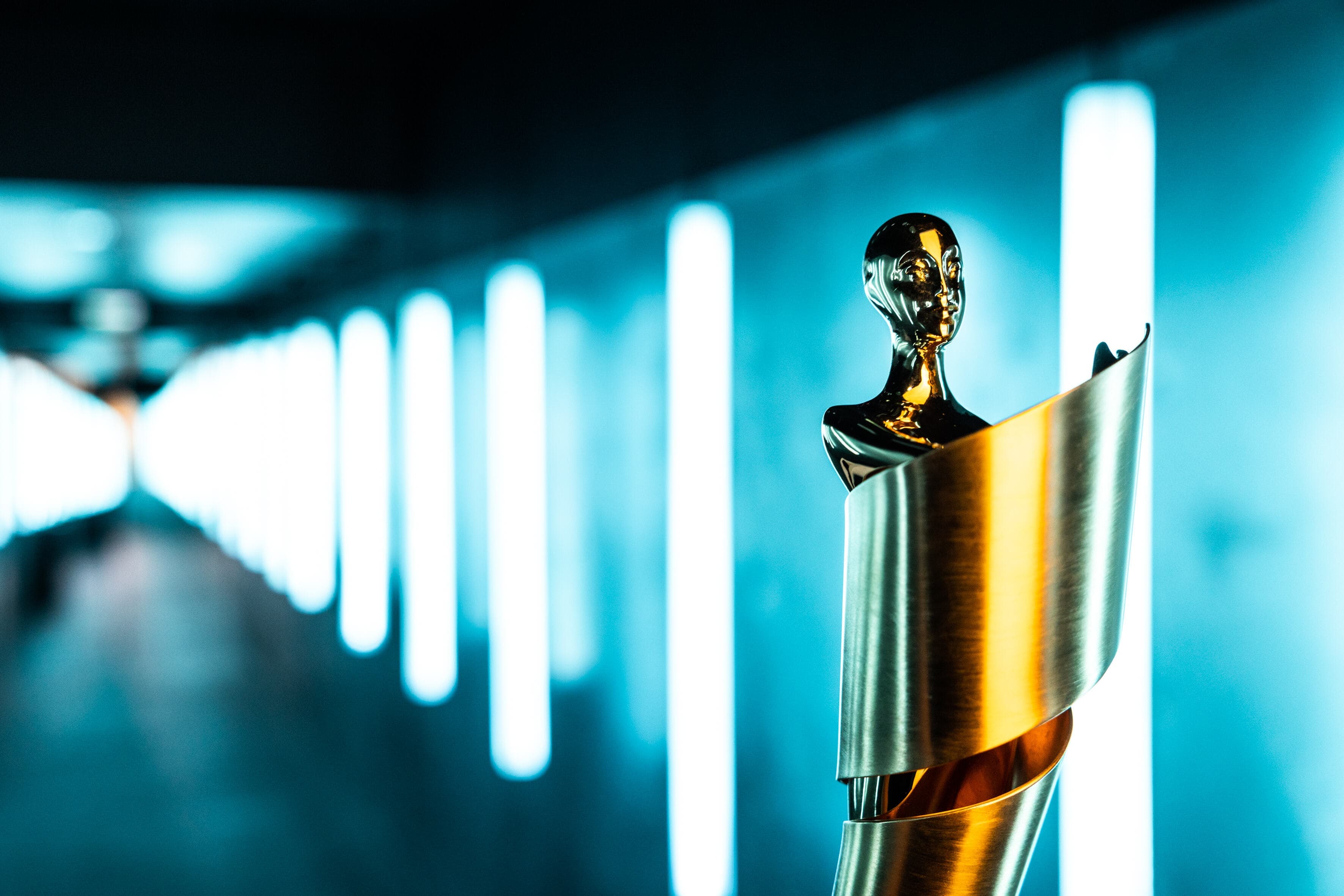
Five nominations for the Deutscher Filmpreis 2026 are not a pity bonus. Not for a film that draws its dramaturgy from the monotonous rhythm of a swimmer who does exactly 22 lanes every morning. That Mia Maariel Meyer's adaptation of Caroline Wahl's million-copy bestseller makes the Lola shortlist, alongside competitors as disparate as İlker Çatak's Berlinale winner Gelbe Briefe, Mascha Schilinski's Cannes entry In die Sonne schauen and Fatih Akın's Amrum, says something about the Akademie — and even more about the film itself.
22 Bahnen does not make it easy for its admirers. It forgoes the gesture of the grand auteur film, formal virtuosity, the provocation of the political. Instead it trusts something that has become rare in German cinema: the precise observation of an everyday life that quietly collapses under its own weight.
Premise: A Story About Enduring
Tilda, a mid-twenties maths student, still lives in the small town she hates. Her friends are long gone to Berlin or Amsterdam, but Tilda has stayed — because her alcohol-dependent mother Andrea long ago handed over responsibility for her ten-year-old half-sister Ida. Between lectures, a supermarket checkout and the daily ritual at the outdoor pool, Tilda maintains a system that works as long as no one shakes it. Then she is offered a PhD position in Berlin. And Viktor appears, the older brother of a boy she lost five years ago.
So much for the premise. What Elena Hell's screenplay — and above all Meyer's staging — make of it is less a story of breaking out than one of holding on. And that is where the tension of the film's 102 minutes lies: not between Tilda and the world, but between Tilda and the question of whether responsibility is a decision or a prison.
Cinematography: Chlorine, Light and the Architecture of a Family
The film's smartest decision concerns its gaze. Tim Kuhn's camera, passed over in the nominations which one may regret, works with a visual language that oscillates between intimate closeness and summer expanse. In the swimming scenes this condenses into something of its own: under water there reigns a silence that is not peaceful but functional. Tilda does not dive down to flee — she dives down to mute the noise of chaos for a few minutes. Kuhn films this without transfiguration. No turquoise image of redemption, but chlorinated working-class swimming in an outdoor pool that has seen better days.
On the surface, Kuhn relies on contrast-rich, shimmering summer images that carry the promise of a lightness Tilda cannot redeem. One scene is example enough: the sisters come home, the mother has almost set the kitchen on fire. No shouting, no breakdown. Tilda reaches for the cloth bag and collects the empty bottles. The image says everything the dialogue does not have to. Meyer and Kuhn trust that a handful of shots are enough to make the architecture of a dysfunctional family visible.
Mia Maariel Meyer
Tim Kuhn
Ensemble: Control, Longing and the Muscle of Holding Yourself Together
Luna Wedler's nomination as Best Leading Actress may be the most deserved of the film. What the Swiss actress does here is the opposite of showreel acting. Her Tilda is reserved to the point of closure, controlled in every gesture — and precisely for that reason shattering when the control finally breaks. Wedler does not play poverty as a condition, she plays the muscle of a young woman who has learned to hold herself together because no one else will. This is not a cinema of pity. It is precision.
That Wedler and Jannis Niewöhner, nominated as Best Supporting Actor, have already worked together on Christian Schwochow's Je suis Karl, is palpable in a quiet familiarity that goes beyond the screenplay. Niewöhner's Viktor remains opaque for long stretches, a young man who hides his own grief behind laconism. The most intense scene between the two requires no touch: Tilda and Viktor walk along a sparsely lit street at night, wordless, their bodies never meeting, and yet the attraction is almost physically tangible. It is a staging choice that reveals Meyer's understanding of emotional restraint — and says more about longing than any kiss scene.
Laura Tonke, nominated as Best Supporting Actress, holds the least gratifying role of the film: the alcohol-dependent mother, a figure that in German drama often degenerates into social kitsch. Tonke resists this with a performance that neither demonises nor excuses Andrea. There are moments in which we see that this woman was once someone else — and that she knows it herself. Zoë Baier as Ida deserves separate mention, even though her performance was not nominated. The chemistry between Baier and Wedler carries the emotional backbone of the film.
Luna Wedler
Jannis Niewöhner
Laura Tonke
Zoë Baier
Score: Strings, Rave and a Sensory Layer
Dascha Dauenhauer's score, the film's fifth nomination, deserves its own consideration. Dauenhauer, who most recently won the Deutscher Filmpreis for Jan Ole Gerster's Islands and has established herself through works such as Berlin Alexanderplatz, Tatami and Blood Red Sky as one of the most versatile composers in European cinema, writes music for 22 Bahnen that elegantly sidesteps the cliché of the coming-of-age soundtrack.
Her score mixes string textures with electronic bass and rave-like textures — a combination that could seem overloaded on paper but, in the film, unfolds an almost physical pull. The music does not amplify the characters' emotions, it gives the film its own sensory layer, a kind of background hum that vibrates beneath the quiet images.
Dascha Dauenhauer
Source Material: What an Adaptation Owes a Bestseller
The discussion of 22 Bahnen cannot be held without talking about Caroline Wahl's source material — and about the question of what an adaptation owes a bestseller. Wahl's novel, published in 2023 and by now sold more than a million times over, was voted favourite book of the independent booksellers and long ago found its way onto school reading lists. Elena Hell, who had previously proved as head writer of the RTL+ series Sisi that she has a sense for figures under institutional pressure, sticks closely to the original. That is both strength and weakness.
Strength, because Wahl's laconic tone — Tilda's interior monologue, carried in the film by a voice-over — gives the cinema a rhythm that is unusual: direct, sometimes brusque, without the ponderousness that often marks German literary adaptations. Weakness, because faithfulness also brings the novel's blind spots onto the screen. The depiction of poverty remains decorative in places where it ought to be structural. Tilda lives precariously, but the precarity at times feels like a plot point rather than a lived reality.
A broader tension emerges here: the question of who in German cinema is allowed to tell stories about poverty and with what gaze is not settled. 22 Bahnen can be read as an invitation to continue that conversation.
Direction: The Risk of the Quiet Chamber Piece
Mia Maariel Meyer has already shown with Treppe aufwärts and Die Saat that she is interested in people in precarious life situations who are standing at an existential fork in the road. In 22 Bahnen she refines that approach. Her third feature is more controlled, more accessible, its visual language clearer than in the previous films. Meyer herself has spoken of the idea of "commercial arthouse" — a film that does not see ambition and accessibility as a contradiction.
That the Deutsche Filmakademie has selected the film for Best Feature without also nominating it for direction or screenplay perhaps says something about how the academy reads that balancing act: as successful in the sum of its parts, less as a directorial signature. But that reading may underestimate what Meyer is doing here. The decision not to stage a million-copy bestseller as an event movie but as a quiet chamber piece that draws its strength from the interplay of its actresses is not an absence of stance. It is a stance.
Mia Maariel Meyer
Elena Hell
Outlook: 29 May, Palais am Funkturm
What remains when the Lolas are handed out at the Palais am Funkturm on 29 May? 22 Bahnen will have a hard time against the formal ambition of In die Sonne schauen and the political urgency of Gelbe Briefe. But the film does not need to hide behind awards. It has achieved something that rarely succeeds in German cinema: telling a story that millions of readers already know, and still finding its own image. Not always the sharpest, not always the bravest — but one that does not let itself be forgotten.
Tilda swims 22 lanes. Every day. Not one more, not one less. There are people who see in this a ritual of control. And others who recognise in it a form of freedom. That the film can hold that ambivalence without resolving it may be its real achievement.
The world behind 22 Bahnen — the production company BerghausWöbke, which most recently drew international attention with September 5; the network between Wedler, Niewöhner and Meyer's previous work; Dauenhauer's growing filmography, which reaches from Tel Aviv through Lagos to Berlin; Hell's path from series adaptation to cinema — is larger than any single article can capture. Those who follow these lines of connection discover a German film landscape that is more diverse, more networked and more ambitious than its reputation suggests.
Credits
Direction
Mia Maariel Meyer
Screenplay
Elena Hell
Based on the novel by
Caroline Wahl
Cinematography
Tim Kuhn
Music
Dascha Dauenhauer
Editing
Jamin Benazzouz
Cast
Luna Wedler
Jannis Niewöhner
Laura Tonke
Zoë Baier
Production
BerghausWöbke Filmproduktion, Constantin Film
Country / Year
Germany 2025
Runtime
102 minutes
Nominations: Deutscher Filmpreis 2026
5 nominations total
The 76th Deutscher Filmpreis ceremony takes place on 29 May 2026 at the Palais am Funkturm in Berlin.
Sources
The OS for Filmmakers
Who Is Behind the Film?
On ZANOA, the credits, collaborations and creative networks behind the nominated films of the Deutscher Filmpreis 2026 are visible and traceable.
Discover ZANOA →