
IM PRINZIP FAMILIE – Or: What Happens When Love Is a Shift Schedule
Nominated for the Deutscher Filmpreis 2026 as Best Documentary: Daniel Abma's seven-year long-term observation of a residential group in Brandenburg — and a quiet defence of observational cinema.
A child throws a plate against the wall. The caregiver says nothing.
He clears away the shards, puts a new plate down. The boy watches, irritated, perhaps also relieved, because nothing bad has happened. Then he sits back down at the table. It is a scene Daniel Abma did not stage, because you cannot stage something like this. You can only film it if you have been there long enough to become invisible.
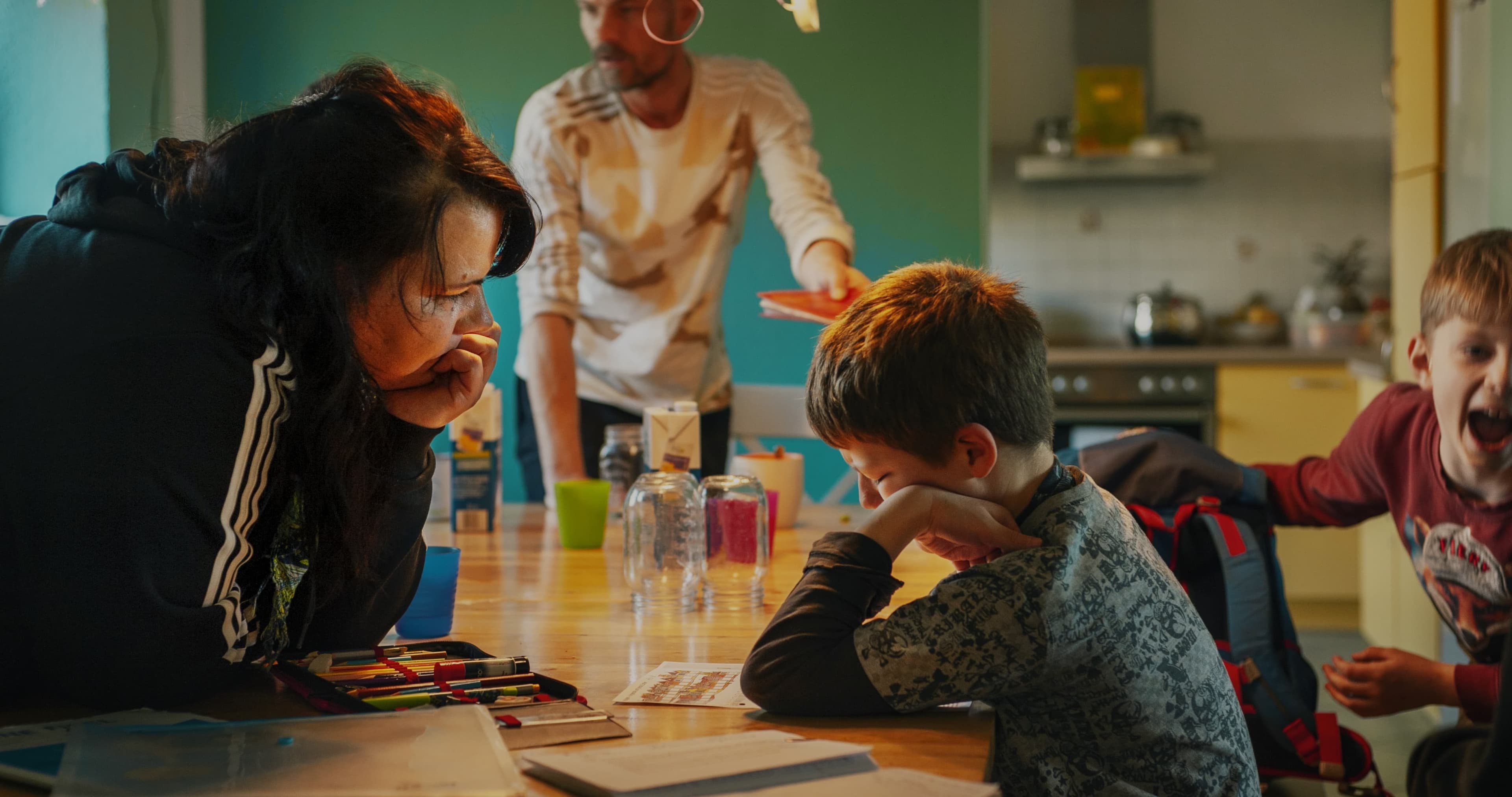
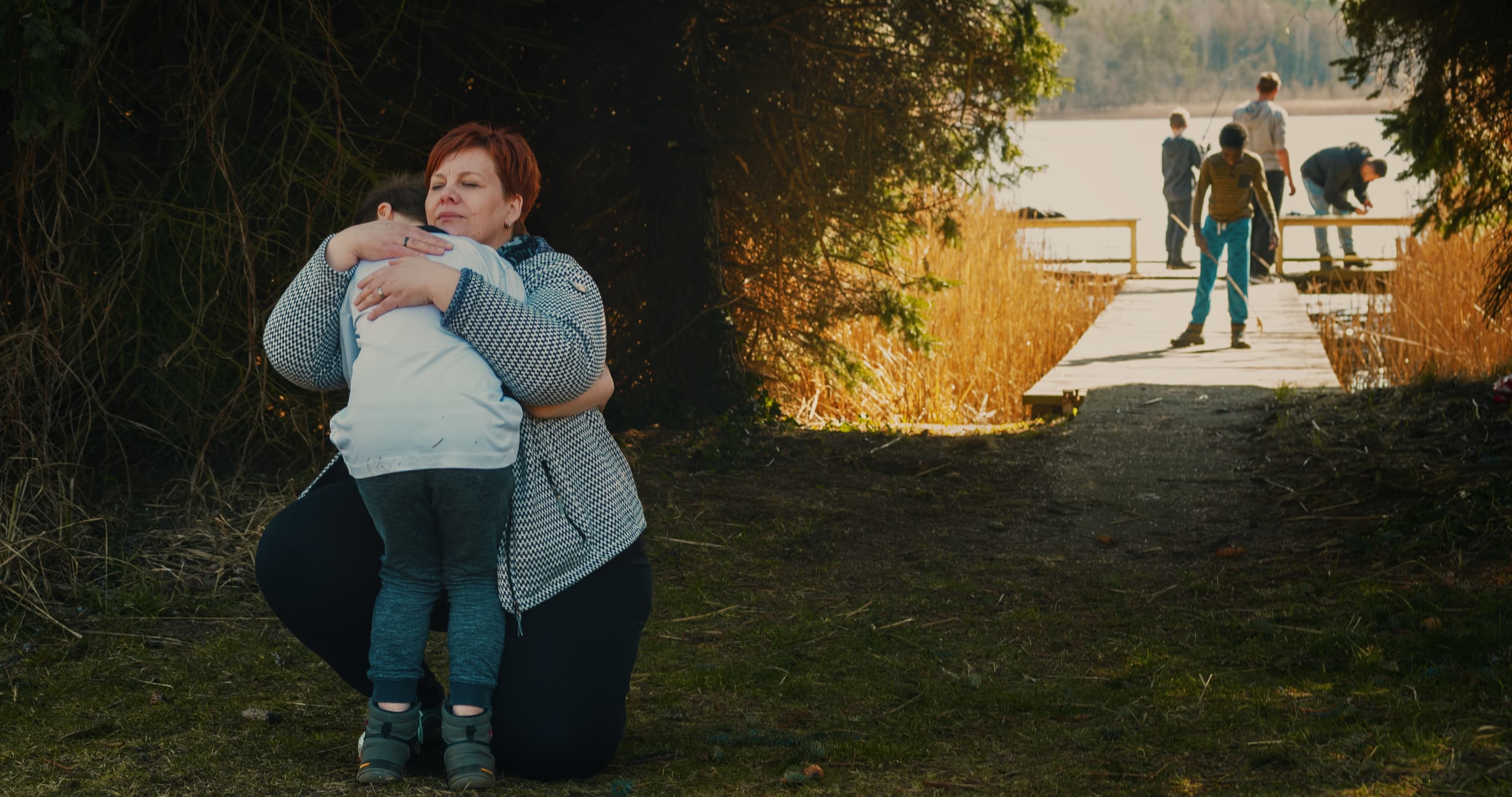
Abma was there long enough. Over several years he accompanied a residential group for boys in rural Brandenburg — five children between seven and fourteen, three caregivers on shift, a house by the lake, surrounded by forest. The setting sounds like an idyll, the everyday like something else: parent meetings that collapse. Youth welfare appointments that postpone what cannot be postponed. Children who want to go home, even when home is the reason they are here. Im Prinzip Familie, nominated for the Deutscher Filmpreis 2026 as Best Documentary, makes visible a kind of work that in Germany is carried out by hundreds of thousands and is almost never seen.
Method: Observing Without Explaining
The most remarkable thing about Abma's film is what he does not do. He does not accuse. He does not explain. He does not classify. The residential group is neither shown as the symptom of a failing system nor glorified as a rescue story. Abma observes — and the word must be taken literally, because observational cinema of this consequence has become rare in German documentary, in a time that favours essay formats, hybrid forms and autofictional approaches.
What he observes are three caregivers: Antje, Max and Sören. Not their private life, but their professionalism — and the moments in which the line between the two becomes unrecognisable. When Sören sits at a boy's bedside in the evening and reads aloud because the boy cannot sleep, that is a pedagogical act and at the same time a gesture that is barely distinguishable from what a father would do. The difference is: in eight hours the shift ends and someone else takes over. The children feel it. The film feels it. And Abma has the discretion not to spell it out.
Daniel Abma
Direction: From Primary School Teaching to Cinema
Daniel Abma, born in 1978 in Westerbork in the Netherlands, came to film by detour. He first studied primary school pedagogy, worked as a media educator in Berlin, before studying film direction at Filmuniversität Babelsberg. His pedagogical background is not a biographical footnote — it is the foundation of his method. Abma knows how to approach children without pressuring them. He knows what a classroom is, a youth welfare office, a report that has to be written in the evening when the children are asleep. This film was not shot by someone discovering an unfamiliar world. It was shot by someone making a familiar world visible.
His debut Nach Wriezen (2012), a long-term observation of young people after their release from juvenile prison, was awarded the Grimme Prize. Transit Havanna (2016) accompanied transgender people in Cuba. Autobahn (2019) told the story of the dispute over a bypass road in East Westphalia. Each of these films is protagonist-centred, observational, social — and each refuses to offer solutions. Abma shows conditions, not theses.
Daniel Abma
Cinematography & Sound: Becoming Part of the House
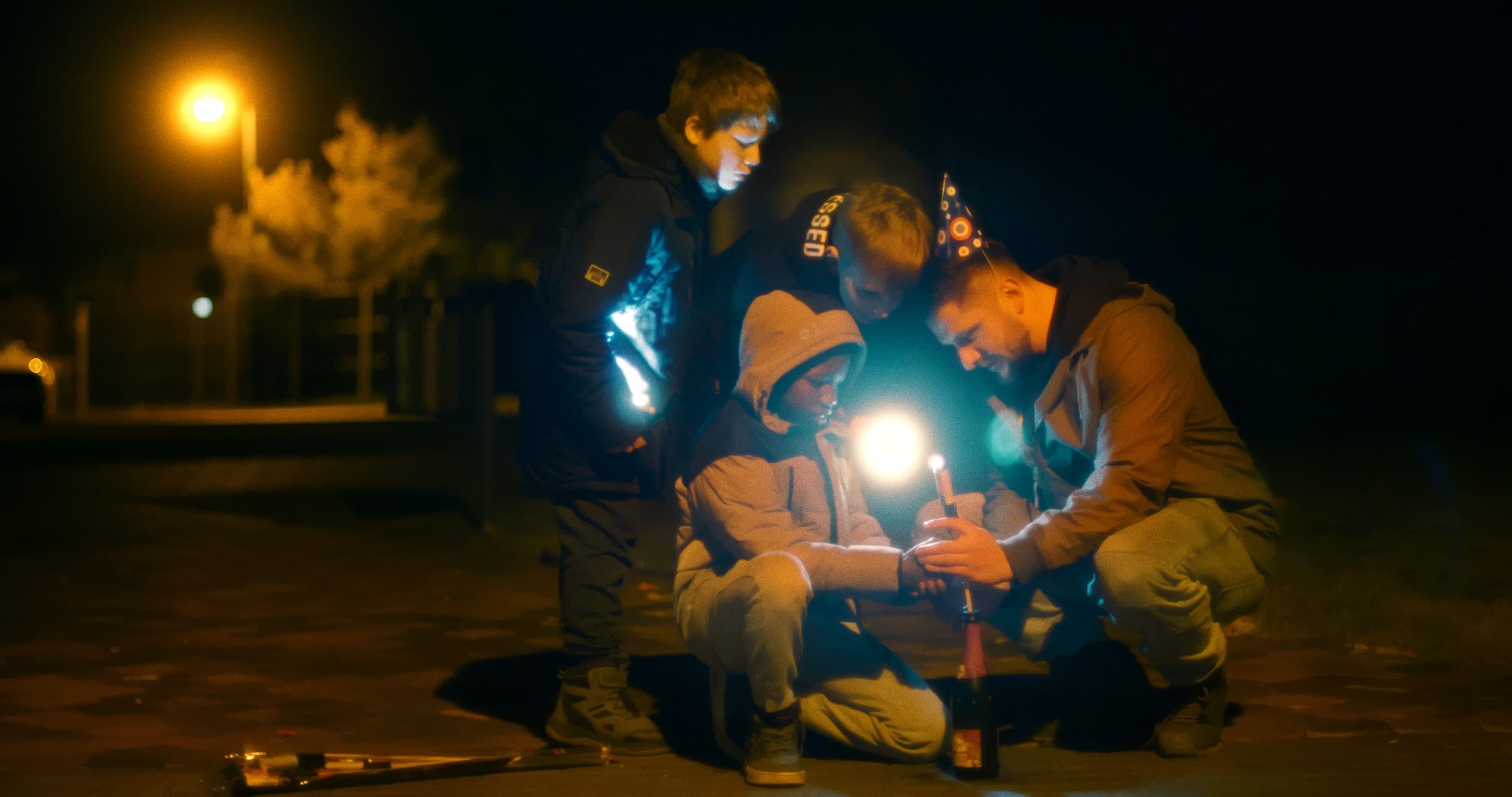
Im Prinzip Familie is the distillation of this method. The more than forty shooting days are spread across a year, always with the same team: Abma, director of photography Johannes Praus, sound recordist Alexandra Praet. The continuity of the crew is not a luxury but a prerequisite: an observational documentary with children only works if the children forget that a camera is there. Or rather: if they no longer perceive it as an intruder but as part of the house.
Praus, who received the Deutscher Kamerapreis 2025 for his work on the film, achieves this by establishing proximity without violating intimacy. His images are warm, at times almost fictional in their composition — and they always preserve the distance that respect for their subjects demands.
Johannes Praus
Alexandra Praet
Key Scene: A Mother as a Sentence in a Report
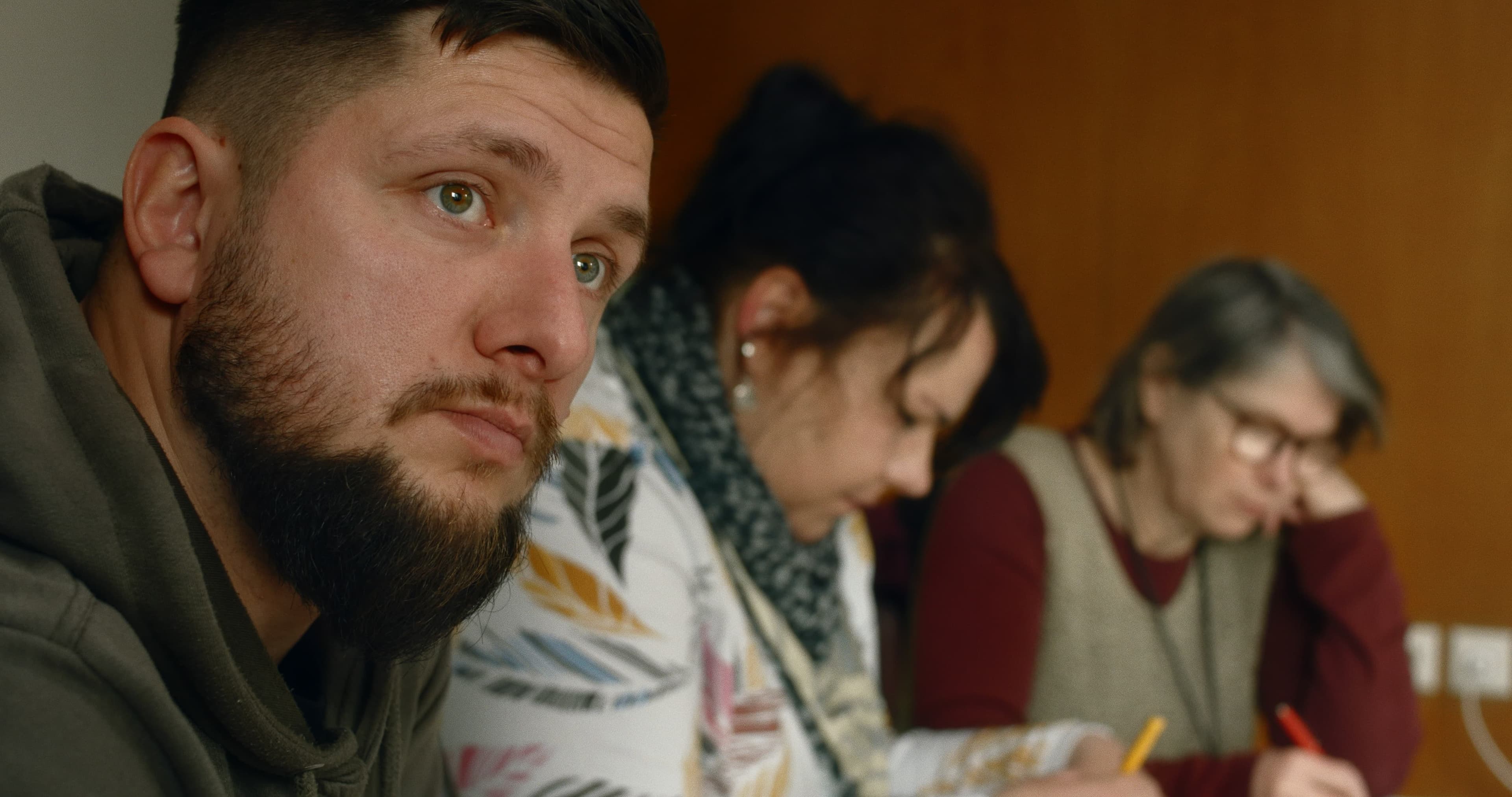
There is a scene that distils the principle of the film. In a team meeting the caregivers mention a mother who in the morning cannot manage to get up for her new job and has to be woken by a neighbour. Abma could raise his finger here. He could supply context, statistics, bring in an expert. He does none of it. The scene stays in the room where it takes place — at the table of the residential group, between shift schedules and cold coffee. The mother is not in the picture. She is a sentence in a report, and that is exactly how the caregivers learn of her: as information that has to be processed before the next one comes.
The shift reports themselves — filmed as Antje, Max or Sören type them up after hours — form a layer of their own. They are the language of the institution: sober, formalised, factual. And they are the contrast to what we have just seen: a dinner during which a boy laughs for the first time after going silent for days. The film does not edit these layers against each other. It places them next to each other and lets the viewer feel the gap between what is lived and what is documented.
Editing & Music: The Rhythm of Repetition
Jana Dugnus' editing works with a calm that is appropriate to the subject. No hectic cuts, no dramaturgical sharpening, no cliffhangers before the chapter breaks. Im Prinzip Familie has, like life in the residential group, a rhythm of its own: the rhythm of repetition, of small advances and of setbacks that no one sees coming, although everyone knows them.
Henning Fuchs' music — his third collaboration with Abma after Nach Wriezen and Autobahn — sets melodic, almost pop-like accents that keep the film from sinking into heaviness. A song Fuchs composed specifically for the film plays over the closing scene: a party at which the children dance. It sounds like a happy ending, and the film is wise enough to show it for what it is: a good evening. No more, no less.
Jana Dugnus
Henning Fuchs
Ethics & Production: Seven Years of Trust
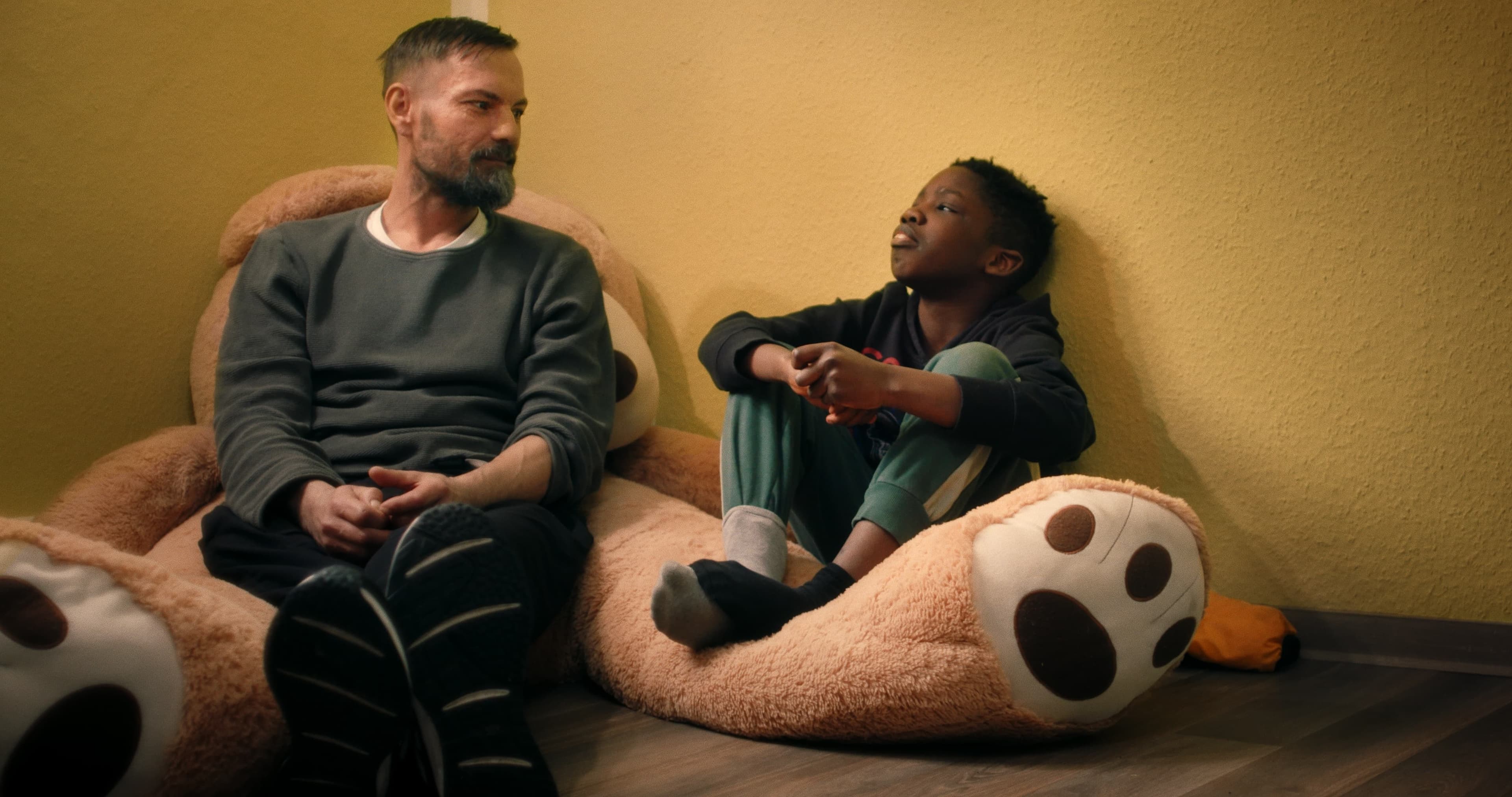
Bandenfilm — producers Britta Strampe and Laura Klippel — realised the film in co-production with RBB and Arte. It is a constellation typical of German documentary: public broadcasters as co-producers, regional and national film funding as financing pillars. What distinguishes Im Prinzip Familie from many productions of this kind is the time the project was granted. Abma first visited the house in 2018, introduced by a social worker he had met at a discussion of Nach Wriezen. Between that first visit and the cinema release in June 2025 lie seven years. Seven years in which trust was built, ethical questions negotiated, and dramaturgical decisions made that cannot be solved on the editing table, but only in dialogue with the participants.
The questions of anonymisation that Abma and his team confronted from the beginning are, in a film about children in youth welfare, not a marginal note but a fundamental decision. All the children are referred to by first name only. Their surnames never appear. The location of the residential group is kept unknown, references have been digitally removed. These are measures that seem to constrain the film at first — no sign at the gate, no Facebook profile to cross-check — and in fact liberate it. Because through this anonymisation Im Prinzip Familie stops being a film about these specific children and becomes a film about the principle the title names: that family is not bound to blood. That it can be produced — temporary, professional, and still real.
Britta Strampe
Laura Klippel
Outlook: A Category That Deserves Attention
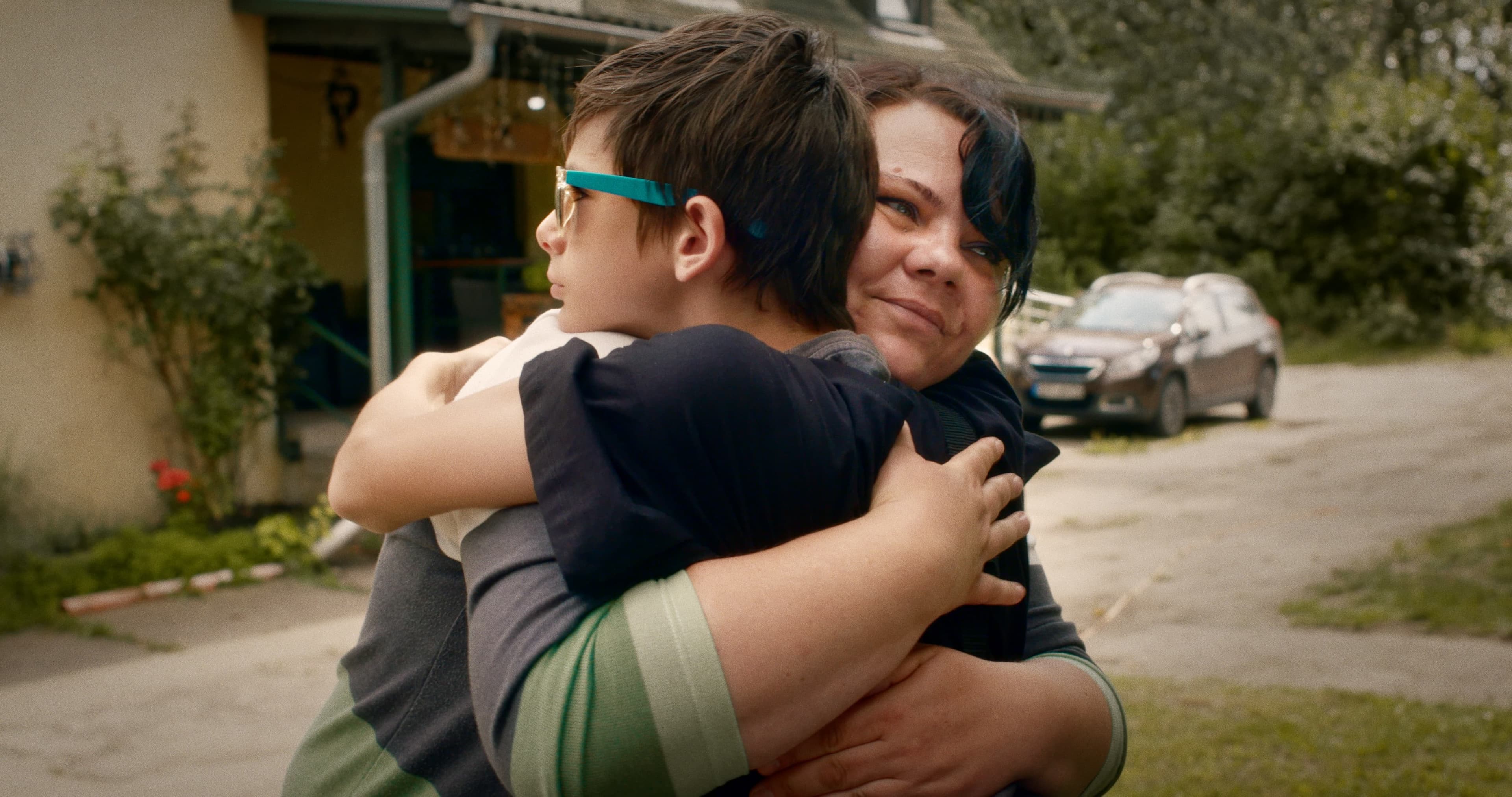
Since its premiere at DOK Leipzig in October 2024 the film has had a remarkable journey: the ver.di Prize for Solidarity, Humanity and Fairness, the Perception Change Award of the United Nations, the Main Prize of the German Documentary Film Award 2025, the Deutscher Kamerapreis for Johannes Praus. And now the Lola nomination. In the Best Documentary category it competes with Sabine Lidl's Siri Hustvedt – Dance Around the Self and Julian Vogel and Johannes Büttner's Soldaten des Lichts. It is a category that traditionally receives less attention at the Lola ceremony than the feature film categories — and for precisely that reason it matters, because it shows the range that German cinema covers.
Im Prinzip Familie does not need spectacular images or a formal experiment to convince. The film works because it does what documentary cinema does at its best: it makes visible what is there and not seen. The work of child and youth welfare, officially recognised as systemically relevant since the pandemic, remains largely invisible — and not only in cinema. Abma does not change that by uncovering a scandal or demanding a reform. He changes it by placing a camera in a house and waiting until life happens. That sounds simple. It is the hardest thing documentary can do.
The question the film poses without formulating it reaches beyond its subject: what do we owe the children who are not born into functioning families? And who pays the price for that question being asked so rarely? Abma's answer is not a programme. It is an image: a caregiver clears away the shards. Puts a new plate down. And carries on.
Credits
Direction & Screenplay
Daniel Abma
Cinematography
Johannes Praus
Sound
Alexandra Praet
Editing
Jana Dugnus
Music
Henning Fuchs
Producers
Britta Strampe
Laura Klippel
Production Company
Bandenfilm
Co-production
RBB in collaboration with Arte
Country / Year
Germany 2024
Runtime
91 minutes
Nomination: Deutscher Filmpreis 2026
1 nomination
Awards
The 76th Deutscher Filmpreis ceremony takes place on 29 May 2026 at the Palais am Funkturm in Berlin.
Sources
The OS for Filmmakers
Who Is Behind the Film?
On ZANOA, the credits, collaborations and creative networks behind the nominated films of the Deutscher Filmpreis 2026 are visible and traceable.
Discover ZANOA →