

IN DIE SONNE SCHAUEN – Why This Film Is Becoming the Benchmark for Collaborative Cinema 2026
With 11 nominations at the Deutscher Filmpreis 2026, IN DIE SONNE SCHAUEN demonstrates how direction, cinematography, editing, and every department together shape a distinctive cinematic language.
The walls breathe. This is not a metaphor. It is a stage direction.
In Mascha Schilinski's In die Sonne schauen, the walls of a courtyard farmhouse in the Altmark are not a backdrop but a repository: of smells, sounds, fear, desire, and the imprint of bodies long gone. Four girls grow up on this farm, each in a different era: Alma in the 1910s, Erika in the 1940s, Angelika in the 1980s, Nelly in the present. They do not know each other, but they share something heavier than blood: the place that shaped them. And the traumas that live in its foundations like damp.
Eleven nominations for the Deutscher Filmpreis 2026. Jury Prize at Cannes. Germany's submission for the Oscars, on the Oscar shortlist. Metacritic score of 91 out of 100. Over fifty festival nominations worldwide.
The numbers are remarkable, but they only tell half the story. The other half is the question of how a film from a 66-person village in Saxony-Anhalt, shot in 34 days, without stars, without genre affiliation, without the slightest concession to conventional narrative forms, became the most decorated German film of the year.
Direction and Screenplay: The Farm as Fifth Character
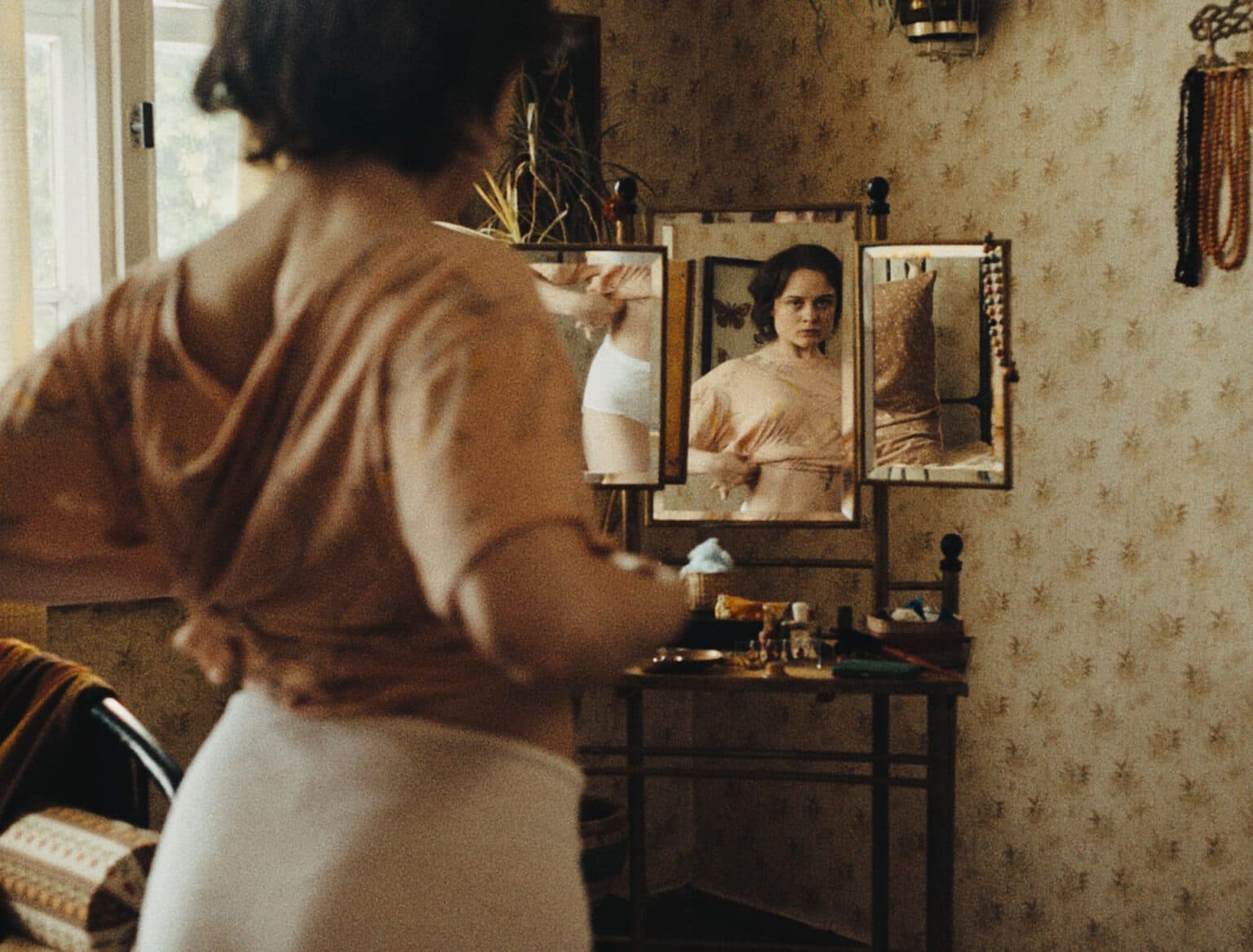
Mascha Schilinski, born in Berlin in 1984, had made one previous feature before In die Sonne schauen: Die Tochter (Berlinale 2017, then titled Dark Blue Girl). She wrote the screenplay together with Louise Peter, inspired by a real farm in Neulingen, Saxony-Anhalt, which immediately raised the question at the film's core: what must have already happened here?
In die Sonne schauen follows no linear narrative. The film jumps between four time levels without announcement, without chapter markers, sometimes in the middle of a sentence. The boundaries between characters blur: a glance Alma casts out of the window around 1912 is caught by a cut showing Nelly in 2024, looking out of the same window. The camera moves through rooms that have changed over decades and yet remained the same.
The farm is the fifth character, and the most enduring one. 149 minutes that never feel like 149 minutes, depending on whether one is willing to follow the film's own logic. International critics called it "a film for the ages" (Deadline), cinema that reinvents itself (Hollywood Reporter), a work whose brilliance only registers after the credits roll (Filmstarts).
Mascha Schilinski
Louise Peter
Cinematography: A Palette That Carries Epochs
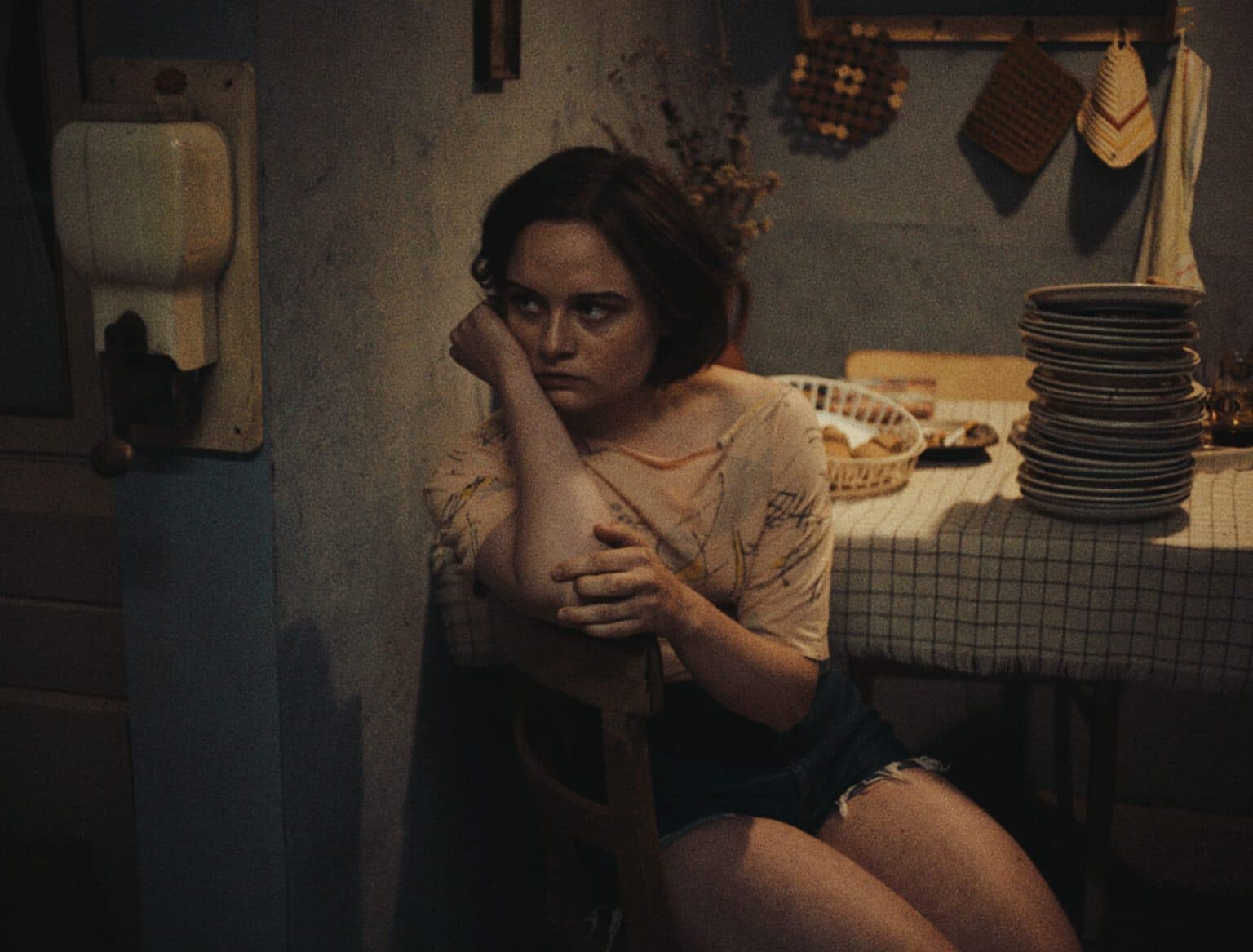
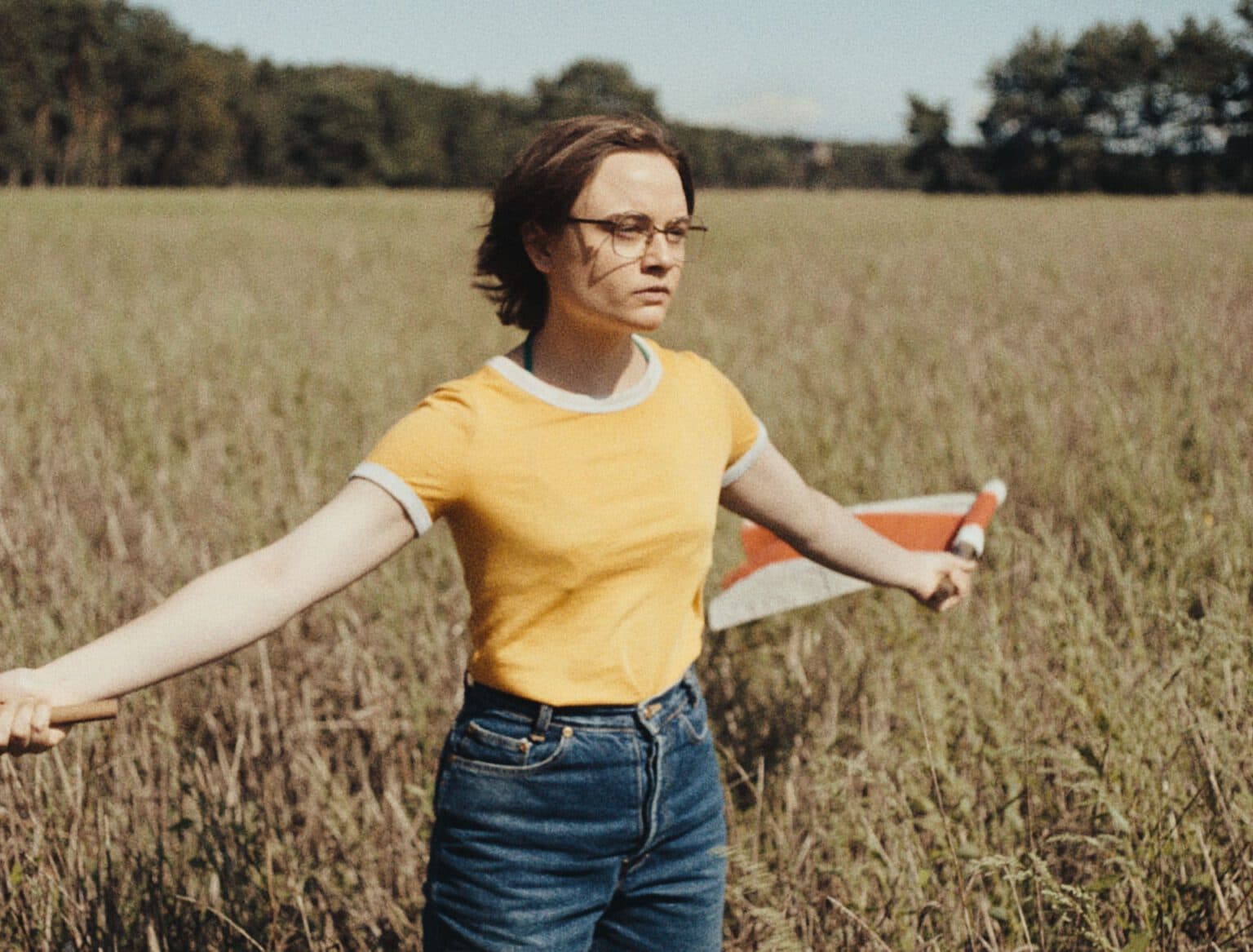
Fabian Gamper's camera, nominated for the Lola, is the instrument through which Schilinski's vision becomes visible. Gamper works with a palette that shifts between eras without losing visual coherence: the images of the 1910s recall daguerreotypes, grainy and flickering, as if memory itself were decaying. The 1940s carry the cool sharpness of black-and-white photography. The 1980s bring the muted colours of Super-8, the light of a DDR childhood. And the present is shot in digital clarity that paradoxically feels least tangible.
Gamper and Schilinski drew on the work of American photographer Francesca Woodman for their visual concept: an artist of the dissolving body, merging with space. The camera in In die Sonne schauen holds faces without fixing them. It drifts through rooms as if it were itself a ghost haunting the farm.
In one of the most striking passages, it follows Angelika (Lena Urzendowsky) through the house, and suddenly it is no longer Angelika moving through the corridor but Erika (Lea Drinda), decades earlier, in the same hallway, with the same fear. The cut happens so imperceptibly that it only registers on a second viewing.
Fabian Gamper
Editing and Sound: Memory as Structure
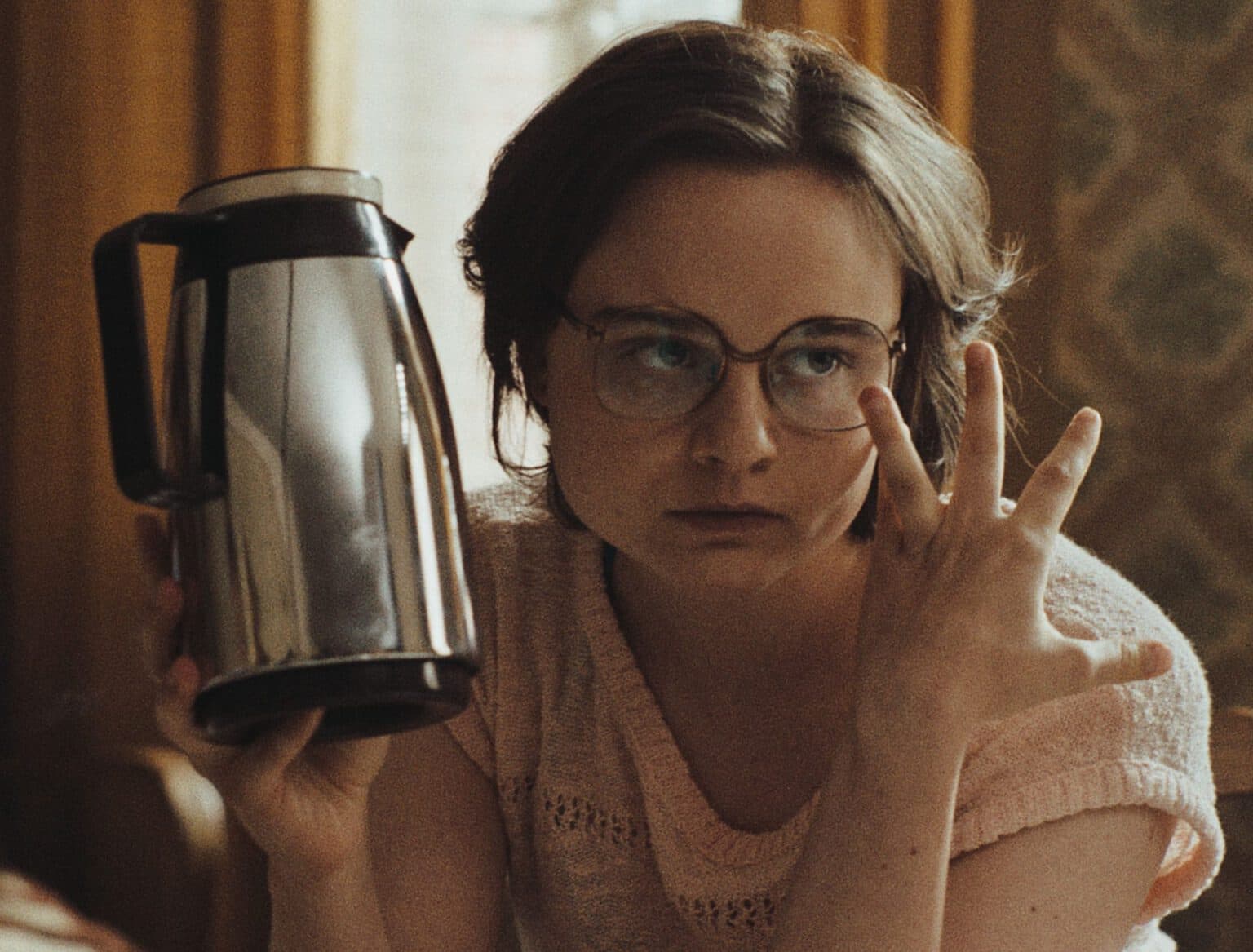
Evelyn Rack's editing, also nominated, is the film's invisible engine. Rack does not work with classical cutting patterns but with an associative montage technique: images follow each other not through causal logic but through emotional resonance. A falling apple in autumn 1912 becomes a falling body in 1986. The sound of a slamming door connects decades. Rack developed the film together with Billie Mind, the sound designer.
The sound design, credited to Claudio Demel, Billie Mind, Kai Tebbel, Sebastian Heyser, and Jürgen Schulz, deserves its own paragraph. In die Sonne schauen sounds unlike any German film of recent years. The farm has an acoustic life of its own: the creaking of beams, the buzzing of flies, the rumble of a sound layer that never fully settles.
The wind sounds different in the Kaiserreich than in the DDR: not because the wind has changed, but because the ears that hear it are different. Billie Mind developed a concept that treats sound as a memory trace: sounds bleed across time levels, a child's cry from the 1940s echoing into the 2020s. It is an acoustic equivalent of what the film does visually, and it works because it is never explained, only felt.
Evelyn Rack
Production Design, Costume, Make-Up: The Farm as Palimpsest
Cosima Vellenzer's production design and Maike Kiefer's set decoration faced the task of accommodating four epochs within a single location, without erasing the traces of each era but allowing them to show through. The farm in In die Sonne schauen is not a set rebuilt between time levels. It is a palimpsest: the Kaiserzeit wallpaper still visible beneath the DDR paint, the DDR paint beneath the present-day renovation. Vellenzer and Kiefer make this visible without exhibiting it. It is work that precisely understands what the film is about: the past does not disappear, it sediments.
Sabrina Krämer's costume design follows the same logic. The clothing of each character speaks not just to her era but to her social position within it: Alma wears the rigid severity of a manor daughter who does not yet know her world is ending. Erika the thinned fabrics of the war years. Angelika's clothes carry the bleak functionality of DDR provincial life. Nelly's outfits appear free, and are not.
Anne-Marie Walther and Irina Schwarz's make-up and hair follow the same approach: authenticity through restraint. Every character is dressed in her era, and imprisoned by it.
Cosima Vellenzer
Maike Kiefer
Sabrina Krämer
Anne-Marie Walther
Irina Schwarz
Ensemble: No Lead, No Hierarchy
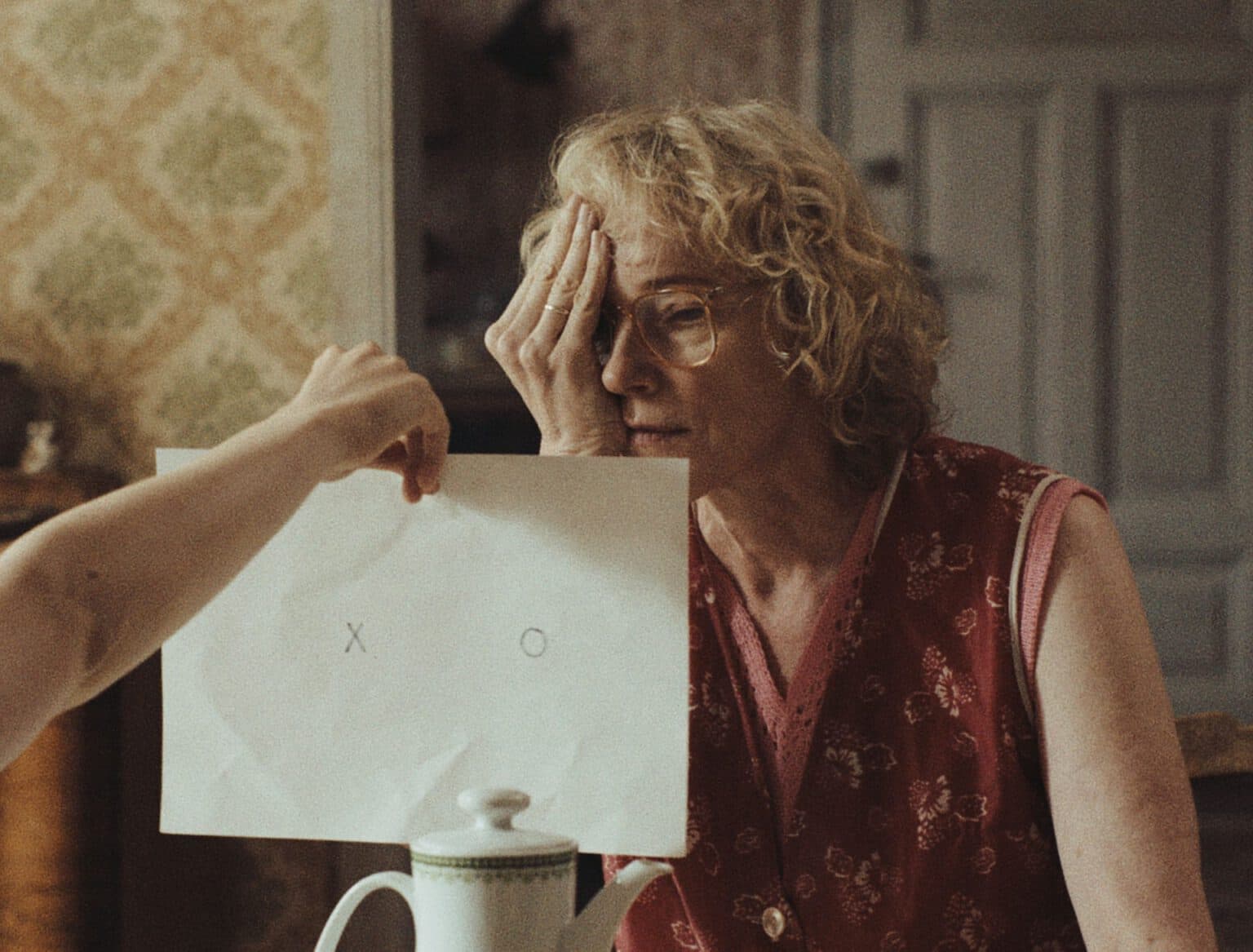
Two supporting actresses are nominated: Claudia Geisler-Bading and Lena Urzendowsky, both for In die Sonne schauen. That the film receives two nominations in the supporting category but none in the lead categories says something about its structure: there is no main character. There are four equal perspectives.
Urzendowsky, who carries the DDR passages as Angelika, plays with a mixture of longing and self-destruction that recalls the finest work of the East German film tradition. Geisler-Bading brings a heaviness to her role that never becomes illustrative: one feels the weight of the years without the film explaining it.
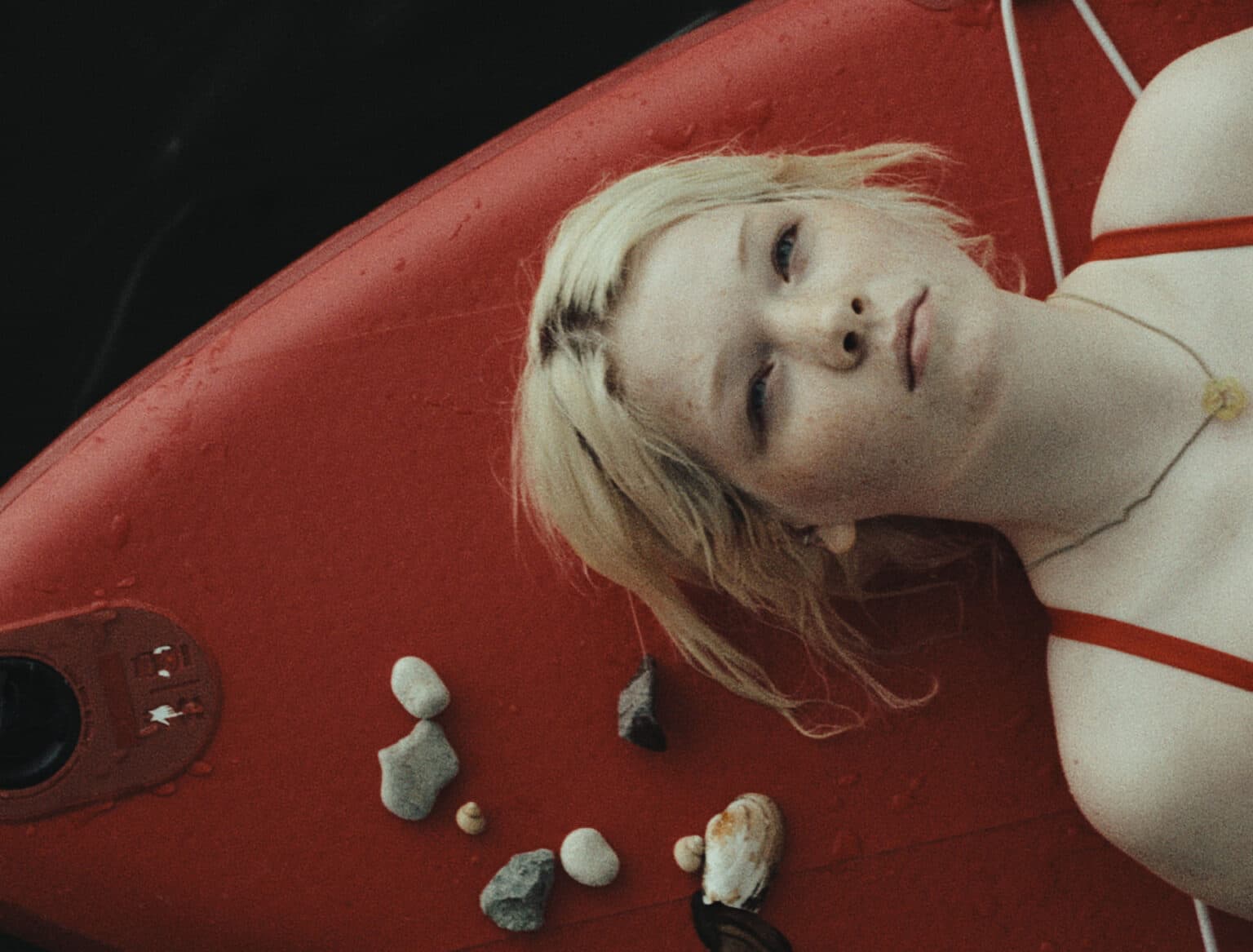
The younger cast members, Hanna Heckt as Alma, Lea Drinda as Erika, Laeni Geiseler as Nelly, were found through a year-long casting process. Schilinski sought faces that could embody their respective era. Working with newcomers is a risk that pays off: there is no actress in this film burdened by an audience's prior associations. One sees Alma, not the actress playing her.
Lena Urzendowsky
Claudia Geisler-Bading
Production and Distribution: A Signal for New Voices
Studio Zentral, founded by Maren Schmitt, Lucas Schmidt, and Lasse Scharpen, produced In die Sonne schauen as their most ambitious project to date. In a German film industry where companies such as Komplizen Film, X Filme, or Schramm Film dominate the auteur cinema infrastructure, the rise of a new studio with a second feature is a signal: there is room for new voices when the work holds up.
The co-production with ZDF and Das kleine Fernsehspiel, the funding strand that has financed German auteur cinema for decades, completes the picture. Mk2 Films took on international sales, Neue Visionen the German theatrical release, Mubi the rights for North America and the UK.
It is a distribution chain that shows how a film from Saxony-Anhalt, made on a budget presumably smaller than the catering costs of some competitors, finds its way onto screens around the world.
Outlook: 29 May, Palais am Funkturm
On 29 May at the Palais am Funkturm, In die Sonne schauen enters the race for the Lola as the clear favourite with eleven nominations. The Akademie has shown in the past that it tends to concentrate its awards on a single film when that film is formally compelling enough: Toni Erdmann in 2017, Im Westen nichts Neues in 2023, Das Lehrerzimmer in 2023. In die Sonne schauen has the profile for it.
But the real achievement lies elsewhere. In die Sonne schauen has shown that German cinema can compete internationally without adapting. No English-language compromise, no genre cinema, no stars. Instead: Low German dialect, a farm in the Altmark, four girls whose stories touch without ever meeting. A film that trusts its audience to feel before they understand.
The farm in Neulingen is still standing. The walls are still breathing. And somewhere between the epochs that Schilinski has folded into each other lies a story that does not stop, because memory never stops. You can look into the sun. You will be blinded. But the afterimage remains.
Credits
Nominations: Deutscher Filmpreis 2026
11 nominations total
Awards
The 76th Deutscher Filmpreis ceremony takes place on 29 May 2026 at the Palais am Funkturm in Berlin.
Sources
The OS for Filmmakers
Who Is Behind the Film?
On ZANOA, the credits, collaborations and creative networks behind the nominated films of the Deutscher Filmpreis 2026 are visible and traceable.
Discover ZANOA →